This week, Jeremi and Zachary interview Brown University historian Dr. Omer Bartov about his book, Israel: What Went Wrong?, written after October 7 amid his efforts to understand Israeli society, media narratives, and the war in Gaza informed by his visits to Israel in 2024.
Dr. Omer Bartov is the Dean’s Professor of Holocaust and Genocide Studies at Brown University. He is the author of many important books, including: Anatomy of a Genocide: The Life and Death of a Town Called Buczacz; Tales from the Borderlands: Making and Unmaking the Galician Past; and most recently, Israel: What Went Wrong?.
Guests
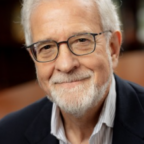 Dr. Omer BartovDean's Professor of Holocaust and Genocide Studies at Brown University
Hosts
 Jeremi SuriProfessor of History at the University of Texas at Austin
 Zachary SuriHost, Poet and Co-Producer of This is Democracy
2026-05-08-this-is-democracy
===
[00:00:00] Intro: This is Democracy. A podcast about the people of the United States. A podcast about citizenship. About engaging with politics and the world around you. A podcast about educating yourself on today’s important issues. And how to have a voice in what happens next.
[00:00:20] Jeremi Suri: Welcome to our new episode of “This is Democracy.”
This week, we are talking with one of the most distinguished historians of the Holocaust and genocide studies, uh, this is Professor Omer Bartov from Brown University. Uh, Professor Bartov, thank you for joining us today.
[00:00:38] Prof. Omer Bartov: Thanks for having me.
[00:00:40] Jeremi Suri: Uh, formerly, Professor Bartov is the Dean’s Professor of Holocaust and Genocide Studies at Brown University.
He’s the author of numerous important books, many of which I have imposed on my students over the years. Uh, two of my favorites, I… There’s not enough time in the entire podcast to list all of his work, but two of my favorite books of his are Anatomy of a Genocide: The Life and Death of a Town Called Lukach, and, uh, which really, really a micro study of, uh, genocide in action, and then, uh, a really very thoughtful ruminating book on the Galician past, uh, called Tales from the Borderlands: Making and Unmaking the Galician Past.
Most recently, uh, Professor Bartov has written a really, uh, powerful book, powerful and controversial book called Israel: What Went Wrong? And I wanna encourage all of our listeners, regardless of your point of view on this issue, to read this book because it’s packed with information and thoughtful perspectives on these issues.
Um, in addition to Omer Bartov, we’re of course joined by my co-host, Mr. Zachary Suri. How are you today, Zachary?
[00:01:47] Zachary Suri: Doing well. Good afternoon.
[00:01:48] Jeremi Suri: Well, okay. So to get us started, uh, Omer, maybe you can tell us why you wrote this book. It’s a little different from your scholarship over the years.
[00:01:59] Prof. Omer Bartov: Um, yes. First of all, thank you to both of you and to whoever is listening.
Um, and, and thank you for the nice words about, uh, my, my books. Um, I, I wrote this book in ve- very much as a consequence of, uh, like many other people, being sucked into what was happening in Israel, Palestine, Gaza, uh, after October 7th. Uh, and so in the months that followed, I wrote a variety of op-eds and other essays, um, and talked about it, um, on, on various occasions.
And I was trying, first of all, just to understand what was happening on the ground. I was trying to understand what, uh, how Israelis were understanding this, how this was being covered in Israel. I am an Israeli. I was born and raised there. I served in the military there. I spent the first half of my life there, and I have many friends and family there.
Uh, and so I also went there a couple of times in June and December of 2024. Um, and after a sort of pretty intense engagement, uh, I felt that it would be useful for me and maybe for others to try and distill all of that into a book, uh, that would try to understand what is going on, what were the immediate roots of that, and to go further back into what are the roots of, uh, the Israeli state, to why Israel has become what it has, uh, as well as to dwell also on debates over Israel, over antisemitism, and over Zionism.
Um, so that culminated in this book
[00:04:02] Jeremi Suri: Frequently in the book, you reflect personally and from an academic perspective on how, in, in your words, Israel has fallen into an abyss. That’s, I think, a metaphor you use a few times, and, and you draw a, a really powerful distinction early in the book around pages forty-four and forty-five, the first chapter, on the difference between the Israel of the early 1980s when there was, uh, widespread, uh, anger and revulsion at the, um, massacres in the refugee camps of Sabra and Shatila, um, where Israeli citizens were angry at their own government for doing this, to today, where you, you talk about and quote many figures in Israel, one of them, uh, Ze’ev Smiliansky, um, who you quote writing, “There is no room in my heart for the children in Gaza, however shocking and terrifying it is, and even though I know that the war is not the solution.”
Um, and obviously October 7th, uh, the, the horrible attack by Hamas on Israel is part of this story, but I think you’re making a broader argument about a transformation in Israel. Can, can you articulate that for us?
[00:05:08] Prof. Omer Bartov: Yes, it is, and that, and that’s part of the, um, what I’m trying to do in the book, because on the one hand, like every story, and I’m, I’m, I’m trying to look at the roots of what happened, and when you look at the roots, you, you say, “Well, certain things were more likely to happen than others.”
But at a, as a historian, you also want to make sure that your thinking is not deterministic. It’s not determined in a way that what happened now is the only way things could have turned out, and I don’t think they are. So, um, the example that, that you give is, is a good one. I was at that demonstration of the four hundred thousand, uh, and at the time, um, following the m- the massacre in Sabra and Shatila, one has to remember that the massacre itself was carried out by the Maronite militias, by the Phalange.
Um, they were supported by the surrounding Israeli troops that were, uh, firing flares all night to light their way, but Is- Israeli soldiers were actually not doing the killing, and yet there was huge outrage in Israel, and that led… It was not just a demonstration. It, uh, led to a commission of inquiry.
Eventually, um, Sharon, who was then Minister of Defense, had to step down. Begin, eventually the prime minister, also stepped down. So there was a huge response. This time, it was Israeli troops that were carrying out the killing of well over seventy thousand Palestinians in Gaza, and that’s a very conservative figure that the IDF has acknowledged as well.
Um, and there was no protest against this, and people get confused between the fact that there were protests against the government, and they at times think that these were protests against what was happening in Gaza, but that’s not the f- the f- uh, the fact. And the person that you mentioned, Ze’ev Smilansky, Ze’evik, whom, uh, as I know him, I’ve, I’ve known him since I was 17, so I’ve known him for most of my life.
We were in the army together, and I’ve also known his father, who was a very, very good friend of my father. Both of them were writers. Uh, S. Yizhar, um, Yizhar Smilansky, but his pen name is S. Yizhar, wrote the first important novella on the Nakba that came out in 1949, uh, in which he was a soldier and described the expulsion of Palestinians, uh, with making sort of literary allusions to expulsions of Jews in the past.
Uh, and so for Ze’ev Smilansky, who I believe was at that mass demonstration of the 400,000, uh, after Sabra and Shatila, to have said that, uh, to an Israeli newspaper, to Haaretz newspaper, um, in, in the spring of 2024 was shocking to me. Uh, w- what happened? He’s a member of my generation. What happened to people that they could think in such dehumanizing terms about Palestinians, about close to 20,000 children who were killed, uh, and to say there’s no room in their heart, and how this man, who is himself in his 70s now, uh, and who has the legacy of, of his father on his shoulders, to express himself in that way was shocking.
And, um, I’ll add one last thing that maybe will accentuate that, that I published that a citation from his interview in the, in Hebrew in an Israeli paper in English, and as a result of that, he broke with me, and he no longer wants to communicate with me. Uh, not because I was citing a private conversation, but because I was citing a public, publicly available statement by him in Hebrew, uh, because And this is very much part of, um, kind of Israeli mentality because it was washing the dirty linen in public.
[00:09:38] Jeremi Suri: Hmm. W- why do you think this transformation has occurred in Ze’ev and others? What, what has, what has– And this is part of the, the center of your book, right? What, what has happened in Israel and what has happened within Zionism to, in your terms, create a, shall we say, a greater callousness and tolerance toward what you call genocidal violence?
[00:10:01] Prof. Omer Bartov: So w- what I would say is that in the years, um, in, in the past few decades, um, there have been two m- major factors that caused the transformation of Israeli society, I would say. One is the politics of commemoration in Israel. Now, that was already spoken about, uh, during the First Intifada of the late 1980s.
It’s not new, but it has become worse over time. Uh, that is that the Holocaust, which initially in the early couple of decades of the state was an event that people in Israel were somewhat uncomfortable with or even ashamed of because there was this notion that the Jews went like sheep to the slaughter, and we, the young Zionists, would never do that.
We have transformed ourselves into something else, was transformed into something else, into not only, uh, an event that we remember and research and commemorate, but also one that has become a, an imminent danger, uh, to Israel, that the Holocaust could happen again at any moment. Um, and that, it, strangely, has become, um, a more and more powerful sentiment as Israel increasingly became the military hegemon of the region, a country, uh, which was last really challenged militarily in the war that I was in, and by the way, that Smilansky was in, too, the war of 1973.
After that, Israel has never fought wars against armies. It’s fought against, uh, uh, guerrilla organizations that had no likelihood whatsoever of winning. They could just cause pain. Um, and yet the, the, the sense that the Holocaust is, is, is right ar- around the corner, that Auschwitz may happen at any moment, became a kind of glue for Israeli society to bind it together as one thing that we all have in common if we are religious or secular or Mizrachi Jews from, uh, North Africa and the Middle East, or Ashkenazi Jews from Europe, or young or old.
We all have that in common that at any moment, the Holocaust could happen again. And of course, Israel was created exactly with the opposite logic, that Israel was the answer to the Holocaust, that once you have a state, uh, then that could never happen again. So this is one- Element. And the second element, which is, uh, at least as important and probably more important, is that since 1967, that is for most of its life, uh, Israel is an occupying country.
It’s a country that occupies millions of people. It’s in fact a country of 50/50. People tend not to think about it that way. 50% of the population under Israeli control are Palestinian Arabs, uh, of whom two million are, uh, Israeli citizens, but with limited and increasingly limited rights. Uh, three million live in the West Bank and two million in Gaza, and they have no rights at all.
They live under arbitrary military rule. And if you occupy people for so long, and an occupation takes, uh, engagement, you need to send your young men and women to occupy, to show who is the boss, to break into people’s homes, uh, in the middle of the night, to humiliate them at checkpoints. That’s what occupation is about.
I, I did that myself. Um, then you dehumanize them. Um, and in the process, you dehumanize yourself, and that process has increased over time. The occupation has become more oppressive. Resistance, for obvious reasons, has grown. And if you tack onto that the changes that are related to that in Israeli society becoming much more right-wing, becoming much more religious, becoming much more intolerant and violence, then you can see how, uh, there’s a path that could have been, uh, was not inevitable, but became increasingly likely that Israel would head toward this abyss of not only destroying others, uh, as it has, but also destroying whatever is left of Israeli democracy, liberalism, civil society, tolerance, the rule of law, uh, which are now all in, um, crumbling in front of our eyes.
[00:14:38] Zachary Suri: I’m curious, um, where you think this sort of politics of commemoration came from. Is it, is it a sort of political logic in and of itself, or is it born of an effort by, you know, political actors that have always been there for, since before the founding of the Israeli state, um, who want a sort of more ethno-nationalist Israel to justify or cover, uh, their policies and their politics?
Is it a political logic of its own or, or, or a kind of political cover or excuse?
[00:15:10] Prof. Omer Bartov: It, it’s both, but, but I would say so, so it certainly has become a tool, uh- Uh, it’s become a license, uh, for violence. It’s given Israel a carte blanche, and both, uh, vis-à-vis itself, to always see itself as a victim, as a past and potential victim, uh, and to present itself as such to others, and to use that also to blame others, to say, “You, uh, Europeans, Americans, have no right to tell us how to behave after you stood by as the Jews were murdered in Europe.”
But how we came there, uh, it, it, it’s a sort of complicated process because even in the 1950s, the Ministry of Education in Israel, uh, was not very interested in teaching the Holocaust. Um, as I say, it was not a comfortable thing to teach, so, or, or to talk about. Um, and that comes about, uh, I think there’s several reasons.
One is definitely, uh, it starts with the Eichmann trial in the early ’60s, which is the first time that the Israeli public is exposed to actual details and accounts of the Holocaust publicly, being broadcast on the radio every night for months. I, I remember that as a child. Um, it, uh, develops from the f- the weeks leading to the War of 1967 when there was a sort of existential fear in Israel.
Uh, Gamal Abdel Nasser at the time, the, the President of Egypt, uh, spoke about throwing the Jews to the sea, and there was this fear that the whole thing was about to collapse. The War of ’73, which was very traumatic, and I remember that very well as a young soldier, a, a sense that, you know, Moshe Dayan at the time, who was the one-eyed general, this tough guy, saying the Third Temple is about to collapse, uh, to fall.
Uh, and then im- importantly, uh, following that war, the rise of the right, and when Menachem Begin, uh, becomes Prime Minister of Israel in 1977, it’s the first time there’s a right-wing government in Israel. Menachem Begin comes from the Revisionist movement. He was born and raised in Poland. He spoke Hebrew with a Polish accent.
He had memories of the Holocaust and a fair amount of guilt feelings about it. And for him, making analogies to the Holocaust, yes, he used it rhetorically, but I think it was also natural to him. He says in 1982, after Israel invades Lebanon, when it’s besieging Beirut, uh, he says, uh, “Arafat in Beirut is like Hitler in his bunker.”
He starts making these analogies between Palestinians and Nazis. Um, and if you add to that, finally, the Second Intifada in which about 1,000 Israeli civilians are blown up in the towns, cafes, restaurants, buses. Um, the, the sense of insecurity, which is a result of the occupation, of course, but is not tr-translated into understanding it that way, um, helps use this, um, uh, fake notion that Israel is about to be destroyed, uh, to make it into a political tool, to use it to justify what is clearly unjustifiable.
Uh, so it, it plays on a lot of sentiments. Netanyahu has certainly used it, and, and many of his ambassadors and other spokespeople have used it intentionally, cynically. Um, but the, the roots of it are deeper than that. Uh, the roots of it are also a kind of sense of existential fear that is irrational but has to be acknowledged that still exists in the Israeli public today.
[00:19:20] Zachary Suri: I’m curious what you make of the notion, which I think is oft repeated, not just in Jewish communities or in, i- by Zionists in the United States, but, but, but I think has become a kind of assumption of news coverage of the war i- in Israel-Palestine, the sense that there’s a, a… trauma, I think, is the word that’s used most often.
I mean, you mentioned, um, ’67, ’73, the Second Intifada, but also just the sort of lingering trauma or sense of vulnerability after October 7th. And I’m curious, um, whether you think this, uh, sort of political transformation, particularly since October 7th, can be chalked up to this sense of trauma, or whether what you’re identifying is something perhaps a little deeper or long-lasting.
[00:20:04] Prof. Omer Bartov: It’s, yeah, you know, it’s, it’s, it’s a good co- question, and it’s, um, it has a lot of sides to it. So yes, there is a kind of sense of vulnerability in Israeli society. Uh, it’s, it’s part of a particular mentality of that society. Israelis tend to say whenever something doesn’t work out their way, whoever they are, whichever party it is, whatever opinion they have, that if that doesn’t work out, then there’ll be a catastrophe.
So there’s a kind of catastrophic thinking in Israel, which is often completely irrational and, and, uh, and no one really takes it seriously, but, but it’s still always used, this sort of sense of catastrophe. So there is that, but, uh, but– And, and, and there is, as I said, the, the cynical use of that by politicians, and especially on the right.
Uh, it didn’t start on the right. It goes back– I mean, I cite in the book a speech by Moshe Dayan from 1956. Uh, so you can go back in history, but, uh, the, the, the massive cynical use of that is certainly, uh, has deepened and exacerbated over time. Uh, there is another aspect to this, and, uh, here the events of October 7th are, are interesting to look at because right after October 7th, immediately thereafter, uh, the sort of slogan that went up was that this was the largest killing of Jews since the Holocaust.
Now, whether it was or, or it, it wasn’t is actually debatable, but it doesn’t really matter. What matters is the invocation of the term Holocaust, because immediately what happened was related to the Holocaust. Other people said this was a pogrom. Uh, and by saying it was a pogrom, they were immediately connecting it to the annals of Jewish history, you know, to the Cossacks, to, to, um, everything that caused, you know, that, that brought about the rise of Zionism.
Now, of course, it was not a pogrom because a pogrom is something that is done by a state or in, by, by a mob, uh, supported by the state against a minority. And in this case, the state was the state of Israel. Um, so there are pogroms that, that, that happen almo- on a weekly basis in Israel, but those pogroms are carried out by settlers against Palestinians in the West Bank.
But the, the use of the term pogrom, both in Israel and, uh, among many Jewish communities, again, um, evoked a sense of Jewish victimhood. Um, and very shortly thereafter, the Israeli media, uh, began speaking of Hamas as Nazis. And now it’s the most common thing on the Israeli media to say the, the Hamas Nazis.
Now, if you associate Hamas with Nazis, and if you say that in Gaza, there are no uninvolved people, meaning everybody is Hamas, meaning everybody is a Nazi- Then what do you do with Nazis? You kill them. You destroy them. There’s nothing you can do about them. That’s why you can say in Israel, uh, that it’s fine that we’re killing children too, because they will grow up to be Hamasniks, meaning Nazis, meaning they have to be killed when they’re still small.
That’s the kind of use. And if you then imagine, and I, I watch the Israeli media, uh, on a daily basis. October 7th is, um, recycled almost every night on Israeli TV, and most Israelis who can watch other outlets in other languages don’t. They still sit and watch Israeli TV every evening. Uh, it– So that trauma is translated in two ways.
First, it’s immediately linked to all the traumas of the Jewish people from time immemorial, uh, and it’s linked directly to the Holocaust. Uh, and that means that whatever happens on the other side, which is, by the way, hardly ever reported, you won’t see scenes of mutilated, uh, children, Palestinian children on Israeli, uh, networks.
Uh, you, you can. You can watch it on Al Jazeera, but most Israelis won’t do it. Uh, then you are wallowing always in a sense of your own victimhood, in a victimhood by people who are associated with the greatest trauma of the Jewish nation, and therefore, uh, that gives you license both to destroy them, to eradicate them, and to tell the rest of the world that it has no right to do anything about that.
And the last thing, which is really important, there is another dynamic, and I, I alluded to that before. That’s not the Holocaust, that’s occupation. Um, that’s the other factor, and it’s important to understand that. And we’ve seen that in many other colonial situations where when, when the people that you colonize, uh, rebel, and often the rebellion, the uprising, uh, will, will, uh, include massacres, um, m- m- you know, uh, horrible violence.
For the colonizer, this immediately justifies the savagery of the people they’re colonizing. And these are people that will always be seen by the colonizer as less than human because that’s what justifies, uh, your colonization of them. And if that uprising is a major one and, and large numbers of your people who are the civilized, the cultivator ones are killed, then your instinct is to pulverize them Your instinct as, uh, you know, as Joseph Conrad writes in Heart of, in Heart of Darkness, is to exterminate all the brutes, and that’s exactly what happened in Israel after October 7th.
There was a consensus in Israel well beyond the statements by this or that politician that people wanted Gaza to be destroyed, and most of them, there were those, maybe a third, who wanted to actually participate in that. Most of them just wanted not to know what happened there, but just to know that the place has been pulverized, destroyed, and will never rise up again.
[00:26:38] Zachary Suri: I, I wanna also ask about, uh, a different historical distortion than the distortion of Holocaust memory, which you talk about in your book, which is the distortion of early Zionist history or the early history of the state of Israel. And I, I, I f- you, you mentioned this in your book as well, um, but there’s, there’s a famous poem by Bialik called On the Slaughter.
Um, and, uh, Netanyahu after October 7th, as he did in 2014 as well, cited this one line of the poem, um, in my professor Peter Cole’s translation, uh, “Vengeance like this for the blood of a child Satan has yet to devise.” Bialik wrote this about the Kishinev pogrom. Um, but conveniently didn’t quote the line before it, which is, “And cursed be he who cries out revenge.”
Um, so I’m curious how this sort of, uh, historical, historical moment, uh, when Israel was founded, the historical moment when there was an effort to, to, to sort of build something new and, and, and to a, a, an emphasis on, on Jewish strength, not as revenge, but as protection or prevention, um, how that is remembered in Israel today, and whether that history is being distorted in, in a similar way and, and whether maybe that’s part of the story as well, a distortion of, of the, the mission of the state of Israel or the, the, the founding of the state of Israel.
[00:27:58] Prof. Omer Bartov: Yes, it definitely is, and, um, this, this, this poem, uh, In the City of Slaughter by <|diarize|> Ira Rega, I mean, uh, which, you know, 1904 it was published, it’s about the Kishinev pogrom of 1903. Um, I, I studied it in school, uh, um, and it, Bialik, who wrote it then as a, as a young poet and, uh, came to be known as Israel’s national poet, um, um, and was a good poet.
Um- … when he wrote it, um, he, he, uh, he, he went to Kishinev, and he saw what happened there, and some 40 Jews were massacred. Uh, many, many were wounded, and there were many cases of rape, of gang rape. Um, and the way he wrote it was not so much an attack on the pogromists. It was an attack on Jewish manhood. Uh, he blames, um, Jewish men, uh, fathers, brothers, husbands.
He describes how, how they are hiding under barrels, under the floor, in cracks in the floor, uh, and praying to save them as their, uh, women, sisters, wives, mothers are being raped. Um, it’s a very powerful poem. Uh, he also calls up to God and, um, uh, says if God does not do anything about this kind of horror, uh, then may God’s, uh, throne be toppled.
So it’s filled with anger. Uh, and that poem became, um, one of the iconic poems that was studied, uh, in Israel over, over decades. Um, so what does it mean? Uh, it means that he was hoping, uh, as a Zionist, for the creation of a new kind of Jewish male, one who would protect, one who would know how to fight back.
The truth of the matter, you know, as, uh, Steven Zipperstein showed in his book on that pogrom, there were actually Jews who fought back. There were working class Jews that were fought back and were killed and wounded. Uh, but Bialik didn’t include that in the poem. He knew it, but he wanted to talk about the need to transform, uh, m- the Jews, uh, to normalize Jewish existence, as the Zionist phrase went.
And I was a product of that process of normalization. My generation was the first generation that was born as Israeli citizens into the new state, and we were supposed to be these normal new Jews carrying guns and with hairy legs and tan skin and, you know, uh, silent, not, not gesturing too much, uh, not being Jewish, looking not Jewish.
Uh, it, it, n- so that’s built into a particular Zionist vision of transformation, and it runs very deep. Um, but over time, uh, it has also changed because part of their vision was also a vision that we need, uh, to be moral, that we need to be not just steadfast, uh, but also ethical. Uh, there were debates. Um, we now sort of make fun or, or, or, um um, condon- condemn this notion, this, this, this assertion that the IDF is the most moral army in the world, which obviously it is, um, anything but.
Uh, but there were debates about that. This has origins of the purity of arms. A- and, and the idea of, like all armies, obviously was always engaged also in massacres and other crimes, but it was a topic of discussion. Uh, there was a notion that this new society, these new men and women would be also ethical, upright.
Um, and that, that aspect of it has changed entirely, and it’s become, uh, focused on vengeance. And as you say, Bialik, um, and th- this line has been miscited over and over again. It didn’t start with Netanyahu. It, uh, has a long history, uh, which Netanyahu knows. Uh, but vengeance was always, um, seen as the wrong thing, just as Bialik talked about it.
You had to create something positive, not to use vengeance. Um, I’ll tell you, m- my father served as a soldier. He volunteered to be in the Jewish Brigade in World War II when he was 17. He faked his ID, and he volunteered to the British Army from Palestine, and he fought in Italy. Uh, and he met the, the survivors of the Holocaust in Europe as a, as an occupation soldier, and he wrote a novel about that called The Brigade in English.
And he talks about vengeance and about how much these young Palestinian men wanted– Palestinian, Jewish-Palestinian men wanted to take revenge, uh, against the Germans. Uh, he talks about, uh, wanting to rape German women as revenge. And then he s– and then, um, and, and I actually have a letter that he wrote my mother about it too from that time when he was, I think, 19.
Uh, and he realizes, and they realize, and the entire discourse was about the fact that you cannot do that, that that is not the way to take revenge. The way to take revenge is to build something clean and beautiful and ethical and upright. And this now, revenge has become the motto in Israel. Uh, um, um, this, this, this entire structure that Bialik actually began of how horrible it is to kill an innocent child now is being used to justify the killing of, of close to 20,000 Palestinian children in the name of taking revenge for Jewish children.
That is the Um, most profound, most, most, m-most disheartening, most heartbreaking, uh, transformation, transformation that has happened in the last few decades.
[00:34:45] Jeremi Suri: I think this is the point, Omer, where your, your work really does come full circle across your career because so much of your work is about the cycles of violence and how violence begets violence and, and that’s certainly what you’re writing about here, how, uh, decades of violence and certainly the October 7th violence then, then, um, triggers further violence and, and it becomes, as you say, an abyss.
We, we are out of time, but I, I have to ask this final question. I wasn’t sure at the end of your book whether you’re hopeful or not that we can come back to building something, as you just said, something that’s not based on revenge, an, an alternative to revenge, or do you still have hope?
[00:35:21] Prof. Omer Bartov: Yes. Look, I mean, at the, at the end of the book, I said that there, there are two, uh, possible scenarios.
One is very dark. Uh, Israel is, uh, well on the way to becoming a full-blown apartheid state, authoritarian, um, violent toward others and towards its own citizens. Um, and, and if that process is not stopped, then it’ll also become a pariah state, and I think most Jewish, uh, communities around the world will, uh, distance themselves from it because it’s also become a main excuse for the rise of anti-Semitism around the world.
Um, the, there is hope in the sense that there is an alternative to that, uh, and I, I say just two things about that alternative. First of all, it can come about right now only by outside pressure, most of all from the United States. Um, um, there, there are positive forces in Palestinian and Jewish Israeli society, but they cannot emerge, uh, without major pressure on Israel, which is the hegemon in that area, uh, in that region of the world, and, um, that pressure has to come from outside, and it has to be strong pressure.
It has to include sanctions. It’s, it, it, it has to include, um, uh, m-pointing out to Israel finally that the limits of its power are not in Washington DC where that power is unlimited, but in Jerusalem where it is, so that it goes back to politics. Uh, that, that’s crucial. Um, I think also that we have to recognize that Zionism as an ideology, as a state ideology that has ruled Israel since 1948, uh, simply has to be dismantled, that Israel as a state has to be reinvented as a state for all its citizens, Jews, Arab, Christians, Jews, Muslims.
It has to. Zionism has- discredited itself, uh, as has the reliance on the Holocaust. Uh, you cannot justify genocide with genocide, and you cannot maintain an ideology that once had a very different meaning for the generation of my father. You cannot maintain it if it was used to justify what Israel did in Gaza.
Uh, and so the state will have to be reinvented. I think it can. It exists. It will continue to exist. But the nature of that existence, uh, really depends on both pressure from the outside and an ability within the country to reinvent its own society.
[00:38:13] Jeremi Suri: Uh, Professor Omer Bartov, you’ve given us a lot to think about.
It’s a, it’s a dark story, but, but there is some hope as, as, as we found in the end of our conversation and as readers will find in the coda, uh, to your book. I want to encourage all of our listeners to, to read your really important and impactful book, Israel: What Went Wrong? It has just been published, and I, and I do hope everyone will read it and talk about it.
Uh, Omer, thank you so much for joining us today.
[00:38:41] Prof. Omer Bartov: Thank you very much for having me.
[00:38:43] Jeremi Suri: Zachary, thank you for your insights and your excellent questions, and thank you most of all to our loyal listeners and subscribers to our Substack for joining us for this week of This Is Democracy.
[00:38:57] Intro: This podcast is produced by the Liberal Arts ITS Development Studio.
And the College of Liberal Arts at the University of Texas at Austin. The music in this episode was written and recorded by Scott Holmes. Stay tuned for a new episode every week. You can find This Is Democracy on Apple Podcasts, Spotify, and YouTube. See you next time.