This episode presents the work of Prof. Andrea Benjamin (University of Missouri), whose recent book examines the formation and maintenance of multiethnic coalitions. Using data from multiple local elections, elite interviews, and public opinion surveys, Prof. Benjamin explains how multiethnic coalitions are the future of American politics. She further discusses how these coalitions can drastically change the political empowerment of racial minorities.
Guests
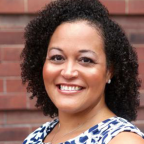 Andrea BenjaminAssociate Professor in the Clara Luper Department of African & African American Studies at the University of Oklahoma
Hosts
 Eric McDanielAssociate Professor in the Department of Government at the University of Texas at Austin
[0:00:05 Speaker 2] Welcome to the American ingredient podcast that examines race in American society from an academic perspective focusing on the work from social scientists and legal scholars. The American ingredient demonstrates that race is not the only ingredient in making America. But in order to make America, you need two heaping spoonfuls, one of things we know about, Politics said. It’s about moves, and this is very clear. During elections, as you see,
[0:00:34 Speaker 3] politicians work to form coalitions by bringing various groups together. Whether it be like the New Deal Coalition of the 19 thirties, which put together blacks, Southern whites as well as working class whites or be current coalitions of progressive whites and blacks or of white working class and religious conservatives and elections, we see politicians attempt to build coalitions and try to bring various groups together under one tent to help them advance their cause to gain office. Today we will be hearing from Professor Andre Benjamin of the University Missouri, where she would discuss her work of multi ethnic coalitions, specifically focusing on how ethnic use play a key role in form of these coalitions and maintaining them. Professor Benjamin focuses on local elections and attempts to show how these coalitions take shape, how they’re able to maintain themselves, but also some of things that may hurt them in the long run. Throughout the interview, you will hear from Professor Benjamin’s partner in crime, her cat, Blake, who’s named after basketball star Blake Griffin will chime in from time to time to offer his opinions on her work. Please pay attention to what Blake has to say. It’s very in depth. We begin the interview today with Professor Brent have been talking about why studying local elections is so important.
[0:01:52 Speaker 0] My research is on local politics, and part of the reason that I study politics at that level is that most municipal elections take place in a non partisan context. And so while we are used to thinking about partisanship as a as a very powerful and extremely useful que in the local context, those cues are taken away and in some ways that creates a different set of incentives that I think candidates have and communities have around the type of coalition that they might be able to build specifically because the candidate names won’t have a D or an R next to their name we rely on other cues, and in my previous work, which thought about bigger cities in some way so much more urban context. Looking at Chicago Houston, L. A in New York, when I found was that co ethnic endorsements ended up being a useful way to think about community signaling to members of their community. This is who might help us and support us if they’re elected to office on DSO building. On that thinking about a 25 to 30 year period of local elections in those four cities, I developed a series of experiments to try to test the causal mechanisms trying to determine whether or not blacks and Latinos are receptive to these cues. You know, it should be noted that not every minority candidate tries to build these coalitions, and also, white candidates are often also trying to kind of build these types of coalitions with voters. But for African Americans, Cohen accuse, are powerful. In many contexts, they rely on them. For Latinos, the relationship is a little bit weaker, and I think that the other scholars have done better work on this to try to think about, possibly because of the identity choices that that group has, even in the political arena. But in a national survey, I could get Latinos to move towards black candidates, in particular when they were given this Cohen that cue that a Latino organization had endorsed the black candidate. And so again, there are some differences. But I think
[0:03:52 Speaker 1] that one of the
[0:03:53 Speaker 0] the outcomes of the research is that I think I offer candidates away to think about how to build those coalitions and once they build them, how to effectively communicate them such that voters will support them.
[0:04:03 Speaker 3] How can candidates build successful multi ethnic coalitions?
[0:04:07 Speaker 4] You know, I think
[0:04:08 Speaker 0] it really goes back to listening, and maybe that sounds rudimentary in some ways.
[0:04:14 Speaker 4] But I think that one of
[0:04:15 Speaker 0] the results in both of my experimental chapters is that issues really matter, right? So even a white candidate just seeking a black or Latino endorsement does not do better among blacks and Latinos as voters, and what that means is they need a context. So for the white candidate to appeal effectively to either of those groups, it needs to be in the context of a racialized issue or racialized campaign. Now, of course, there are limitations. I don’t think I would advise any candidate to run in explicitly racial campaign. But what it suggests is that as a candidate, if you’re seeking out group support, you do need to be on the right side of issues. So it’s not a good time in the current context for a candidate expecting or seeking out Latino support, to say that they’re gonna partner with ICE during the current climate that we’re in, right. So in my current work in Durham, you know, there’s been some previous research that blacks and Latinos, we’re being stopped at an unnatural rate. This is a time for those candidates to talk about how they want officers to go through racial bias training, how they want to work with the Police Department to ensure a culture that treat our citizens with dignity and respect, right so that you have to be on the right side, the issue. So in that sense, if there’s anything that people take away from it, it’s not that blacks or Latinos blindly follow these endorsements. It really is a combination of issues with the endorsement sort of extra seal. I really can’t over emphasize that The endorsement alone is not enough for white candidates
[0:05:38 Speaker 4] for minority
[0:05:39 Speaker 0] candidates, though. For African Americans, for example, when Latino candidates receive black endorsements, there is a shift on. The Latino candidate doesn’t need to talk about issues. And again, given the history around minority candidates and racialized campaigns, that’s a useful finding again. I wouldn’t suggest any money to any minority candidate. Hey, have this really good idea. You should run a racialized campaign. I would actually caution them against that.
[0:06:04 Speaker 3] When we think about these multi ethnic coalitions, we can think of either white black coalition, a Latino black coalition or a Latino white coalition, but also concerns about leadership. What do you see is the future in terms of the leadership. These coalitions,
[0:06:20 Speaker 0] um, you know, we’re really in a time where it might be that the new bi racial coalition is really Latino candidate lead right, because white seem more amenable to it. Blacks are amenable to it in the context of these coalitions and with these endorsements, and so it might be a good a good strategy that if we want that type of representation
[0:06:37 Speaker 6] that a
[0:06:38 Speaker 0] Latino candidate can do the work, so build that type of coalition again going into communities, thinking about the issues that that those that black communities and maybe some progressive white communities want and running on those issues, getting the black endorsements and moving forward, and that they might win
[0:06:53 Speaker 3] well, Do you have any reasoning behind why white voters were more supportive of the Latino candidate in the black candidate?
[0:07:01 Speaker 0] You know, Latino candidates have choices right about how how they sort of portray themselves, not portray themselves. They had identity choices, and there are
[0:07:12 Speaker 4] ways in which, you know, some Latinos
[0:07:13 Speaker 0] are racially white, and so they don’t You know, they don’t have to say, say too many things, but, you know, some of them are obviously racially black. But I think when they make the choice to run in an explicit black Latino coalition, they they’re making a racialized choice, right? And so that’s an option that black candidates haven’t ever had. And so, in that sense, exploring that dynamic is something that I have a paper on. Although that paper also takes into account partisanship. So it’s a little bit different, but I want to say that there’s probably some some better research on sort of hierarchies and that maybe Latinos are preferred toe black candidates in some ways, just in the hierarchy of people’s mind.
[0:07:53 Speaker 3] That one more thing that you’ve mentioned quite a bit is that in the local elections, there aren’t party cues. Can you talk a little more about why party is so important for understanding the coalitions that we take shape or understanding that black and Latino vote at the national level? And why the local level, with the absence of partisan cues in terms of somebody’s running as a Democrat or somebody’s running as a Republican, changes the way people interpret candidates
[0:08:19 Speaker 0] at the national level? The coalitions are, I think, much more more clear. You know, four. They’re sort of this controversy or this talked a whole Bush did so well with Latinos,
[0:08:31 Speaker 4] but by the time we get to 2000 and eight, right,
[0:08:33 Speaker 0] Barack Obama does pretty good around. In the 60% of Latino voters support 2012 it goes up a little bit more for African Americans, of course, you know what? Whether we think that African Americans are captured, all of primers argument that even if they don’t love the Democratic party. The reality is Republicans are courting them. Whether or not we think that there’s a stigma right, I think still pots work. Thinks about this, that blacks could be conservative but not necessarily want to be called Republicans.
[0:09:03 Speaker 6] When referring
[0:09:04 Speaker 3] to Primer Professor Benjamin is referring to Paul Primers work, uneasy alliances, race and party competition, America, where he discusses the difficulties African Americans have in the two party system. When referring to Philpott, Professor Benjamin is referring to Tasha S. Philpott of the University of Texas and our most recent work conservative but not Republican. The paradox of party identification and ideology among African Americans in particular, Professor Philpot finds that the connection between partisanship and ideology amongst African Americans is not as strong as it is amongst whites. She finds that African Americans who identify as conservative are almost just is likely to identify as Democrats as African Americans who identify as liberal.
[0:09:47 Speaker 4] And, of course, you know, in the Latin, Even
[0:09:49 Speaker 0] when Barack Obama ran, you know there were calls for African Americans to abstain, right to try to get the parties to pay more attention to them. Of course, that didn’t happen, right? So in 2012 right? Even more African Americans vote that in 2008 in terms of numbers, so obviously they’re not listening to that. But I think that there is some underlying concern around whether or not even the Democratic Party is best for African Americans, although again at this current time, I’m not sure that there’s an alternative that feels feasible to them.
[0:10:18 Speaker 4] But at the local
[0:10:19 Speaker 0] level, right? I think again that it’s just a different context. And so there’s a different set of issues, right? So in a local context you will find that candidates are often very similar on the set of issues. And, of course, the type of council manager system or council strong mayor system. The type of governing system in a local election really matter. So most local contexts. You have a city manager, and so that person is really tasked with running the day to day business of the city. Such of the council’s really left toe oversee a subset of issues. A lot of it is oniy, right the way that we get things done. A lot of it is development where things are gonna go day to day life things trash, pickup, water, sewage
[0:10:57 Speaker 4] stuff. But in that sense,
[0:10:59 Speaker 0] right, we don’t find as much diversity of issues, right? So there’s not a candidate in a local election where Candide is running on MAWR affordable housing and Candidate B is running on less affordable housing and let the market decide, right? We don’t see that very often.
[0:11:13 Speaker 4] And so in that sense,
[0:11:14 Speaker 0] this also creates an opportunity for these collected cues or cues from other organizations. To really, matter writes in a local context may be your local Sierra Club is offering an endorsement. So you know that if you value the environment, you follow those endorsements or some other organization that you trust, because again, the issues are so similar. One of ah, best quote I think I’ve heard on this came out of thinking was the 2009 Houston election. And basically the Houston Chronicle’s headline was Just like
[0:11:45 Speaker 4] all the candidates
[0:11:46 Speaker 0] are the same. So voters are left to rely on endorsements to make this decision right that because there’s no partisan Q and the type of issues and the issue, diversity is so so small. Voters are really looking for other pieces of information to help them make a decision, right? And so I think that that creates another incentive for a different type of coalition. Um, and again, I believe that these Courtney Cues can really help these voters make those decisions. But it’s not even just caught in accuse right again. You could, maybe your church. Maybe your pastor has an opinion, and he can’t vocalize it or she can’t vocalize it publicly, but they can communicate that information. And that’s how you decide.
[0:12:25 Speaker 3] Professor Benjamin, you noted the importance of co ethnic endorsements. Did you realize there will be this important when you started the project?
[0:12:32 Speaker 4] Sure, I mean so, as I mentioned, I’m not
[0:12:35 Speaker 0] sure that I thought that they would be as important as they were going into the
[0:12:39 Speaker 4] project. But it turns out
[0:12:42 Speaker 0] that they are something that is used a lot in elections, and it’s publicized a lot. So it becomes this very public use to the point that even if a newspaper toe endorse, they will report on endorsements. Then organizations send out mailers with their endorsements, and then candidates list you have a good endorsements tab. So in 2013 in the Los Angeles mayoral election. We did something. I worked with someone there and we collected some exit poll data. And one of the grad students created this spreadsheet of at every endorsement that was mentioned in that campaign. And it’s up to like 1000 are
[0:13:16 Speaker 4] mentioned. And so in some sense,
[0:13:18 Speaker 0] it’s interesting that we don’t know what they mean, and I can’t tell you what they mean in terms of sheer numbers, right? So it’s not as if one endorsement guarantees you 10 votes 50 votes 1000 votes, right? But even without knowing that candidates are excited to get them and in the local context, especially around organizations, it’s a very specific process that takes place. That usually involves some type of interview, some type of candidate questionnaire, whether or not that’s made public or not. So even though I can’t tell you what it means, I know it’s important because people keep making it important, right and so endorsements as it exists at every level. But again, I think that the local context is a unique situation because there are other cues that are lacking that we could get other levels, whether it’s a state level right, those are partisan. The national level is partisan, and so it just become this unique opportunity. And so then endorsements. You know, I think that they matter, and in some work that I have that’s almost ready to come out. We just sent a page perspective. Um, one of my undergraduate students and I have a paper on this in the city of Durham, and we sort of control for a bunch of other things. We still know that partisanship kind of matters and local elections, even though the Q is there. And so in terms of candidates support for City Council election in 2015 we include, you know, the race of the voter. We include partisanship, ideology, age, education, gender.
[0:14:41 Speaker 4] And then we asked
[0:14:42 Speaker 0] voters, Are you aware of who a candidate was endorsed by? And we also asked about some issue preferences. And so awareness of a candidate’s endorsement is significant and positive across all six models. So the voters are very aware of these endorsements,
[0:14:58 Speaker 4] and it’s not
[0:14:59 Speaker 0] causal, right? So I’m not saying that they that they cause voters, but again, if you thought Oh, no, it’s just partisanship, partisanship on, Lee explained. Vote choice for I think two candidates education for a couple of candidates, you know, gender ideology matter for maybe one candidate. Right to that across all the models for each candidate, which there were six candidates in that election. You know, awareness of the endorsements was still a strong predictor. And
[0:15:24 Speaker 4] so we’re still kind of
[0:15:24 Speaker 0] fleshing out what we think that means, sort of as we move forward with the rest of this project. But But I think that’s interesting, right? That even if people so they don’t matter well again, I can’t tell you that they put someone over the top. But the voters are very aware of them. And so I think in that sense they matter, because we continue to send out the mailers we continue to advertise. The newspaper continues to report on any endorsement announcements as if it is news, right? So to the extent that a voter hasn’t had time to do their research is maybe on the fence about particular candidates. I think they can use these endorsements as intended by these organizations, which is we vetted the candidates. We’ve done the research for you, use our information.
[0:16:06 Speaker 3] Could you also argument endorsements provide legitimacy to candidates as well.
[0:16:09 Speaker 4] Ah, 100%. So this is something that my co author
[0:16:13 Speaker 5] and I,
[0:16:13 Speaker 0] Alexis Miller, who is in her first year of grad school at the University of Virginia,
[0:16:18 Speaker 4] we really went back
[0:16:19 Speaker 0] and forth on this right, because I think in the early version of the paper, it seems so innocent, right? And maybe that’s not the right word. But we just viewed these endorsements as very unbiased. We did the research. We interview the candidates, we endorsed this person. We had a body in our membership, voted it was deliberation. But
[0:16:39 Speaker 4] then we started thinking
[0:16:40 Speaker 0] about it. And the title of the paper is picking winners, right, because we think that the organizations are also calculating a level of viability, right? And so if a candidate is great and is right on all the issues but has raised a dollar, I don’t think they’re gonna get the endorsement right. They need to show improved that they can win because that’s what the organization wants, right? They have a set of preferences, but those preferences won’t matter if they can’t translate them by winning. And so there it’s a It’s a fine line on and I just did an interview two weeks ago here in Durham with our regional a f l C i o. So the triangle labor counsel and you know the person in charge would explain to me their process. And he said it. He said, You know what? It’s a. It’s a mixture of issues and viability, right? And so they’re really trying to find that balance.
[0:17:28 Speaker 3] Thus far, we’ve been talking about your book project and how you examined elections, using survey experiments and using a variety of survey data. Very cities. Currently, you’re working on a very in depth once city project. Focus on Dorm. North Carolina could tell us a little more about this dorm project.
[0:17:47 Speaker 0] Thank you. That’s such a great question. I’m really excited to talk about the Durham project. So
[0:17:51 Speaker 4] in some ways,
[0:17:52 Speaker 0] I think when I was playing my book earlier, it just sounded like Experiment, experiment, experiment, experiment, experiment, experiment. And that is kind of how the book feels. So with the Durham project, it feels more personal. It feels like the reader is going to get to know candidates and get to understand processes that are sort of left unsaid in the first book. So here it’s much more qualitative. I think I’ve conducted over 30 interviews now, maybe 35 interviews with candidates running in 2015 in 2017 with organizations again trying to understand their process. How do these endorsements come to be? What is the process by which your organization determines them People who are serving on City Council? How did you run? Did you seek out the endorsements?
[0:18:38 Speaker 4] And so in that sense,
[0:18:39 Speaker 0] it it feels more personal and that I think the reader will get a better sense of sort of some of the details
[0:18:44 Speaker 4] in other ways. It
[0:18:45 Speaker 0] feels big, right? So we have two sets of exit polls, So we’re fielding a poll right now. In the 2017 election, we have the 2015 data. But the other thing is that I really believe that this project is generalize Herbal. I think many cities are facing what Durham is facing. We have come to a place where our city is economically developing, right? So cities air sort of, you know, having a rebirth. People are moving
[0:19:10 Speaker 4] back to the city, and that has brought us gentrification. So now in light
[0:19:15 Speaker 0] of gentrification. We have a new group here who is much more wealthy. They have more disposable income and they want nice things, and that’s great. And that’s great for economic development. So we’ve seen City sort of
[0:19:25 Speaker 4] respond to that. Downtowns are thriving, and at the same time, cities
[0:19:29 Speaker 0] that are not the cities that we think of, not the city’s for my first book are getting new immigrant groups, right? And so it’s been an exciting time, right? We have new people
[0:19:36 Speaker 4] coming, and those two new groups
[0:19:39 Speaker 0] are putting a pressure on our ecosystem, right? And so as we develop downtown and we say, Oh my goodness, there’s all these nice new condo Some of them are going to cost a $1,000,000.
[0:19:49 Speaker 4] People who have lived in the city for 10 20 years cannot afford
[0:19:52 Speaker 0] those condos, and so they’re being displaced. And that sort of issue that a lot of cities are facing
[0:19:58 Speaker 4] and what I’m really trying to understand is what does it
[0:20:00 Speaker 0] mean for groups to incorporate? Right? So thinking about how to minority, um, candidates, blacks, Latinos, liberal wise,
[0:20:08 Speaker 4] How do we
[0:20:08 Speaker 0] get into office? How do we make sure that we can ensure the policies that we think are beneficial to our city becomes a
[0:20:15 Speaker 4] possibility. And I think in this
[0:20:17 Speaker 0] context again, like in Durham, we’ve had a black mayor since 2001. So by burning Marshall on tap standards, we’ve been fully incorporated. But over the eight cancels that we’ve had in that time, there’s only two counts. Also, only a four year period where the council wasn’t majority black.
[0:20:32 Speaker 4] So blacks have done well here, and yet
[0:20:35 Speaker 0] blacks are more likely t be to the live in poverty here. They’re more likely to be harassed by the police here. There’s such a class divide such a If you’re a middle class black,
[0:20:43 Speaker 4] Yeah, I think you think Durham is great. If you’re not middle class black, you’re struggling. So what is it meant to have this representation, right? And then to think about now there’s new groups coming. How are we going
[0:20:53 Speaker 0] to keep the city that the way we want it for the people that have lived here and been here and still accommodate and accept our new our new residents, our new neighbors, right? And so I think that’s really what the book is about, um and I think that I’m still
[0:21:07 Speaker 4] in some ways, I’m not
[0:21:08 Speaker 0] in the early stages of it. Obviously, I’ve collected a lot of data, but until this election in November is done, I can’t tell the direction that we’re going because we as a city haven’t decided. And so I think that there’s, you know, I think that there’s a lot going on. I think people are really excited
[0:21:21 Speaker 4] about electing a new mayor.
[0:21:22 Speaker 0] But as I like to tell people, the mayor, we have ah city city manager system. So our mayor and council of seven people and they all have the same vote. And so in addition to that, we also need to think about our council members, right? So
[0:21:36 Speaker 4] who are we
[0:21:36 Speaker 0] electing? Totally that we think is gonna move the city in the vision in the direction that we think as a voter is the right direction, right? And so that’s really the choice that we’re being faced with.
[0:21:46 Speaker 4] But the candidates are similar but different
[0:21:47 Speaker 0] on some stuff, right? And so it’s been interesting to watch the community engage with them on and watch the candidate sort of appeal to those those blocks and I can’t even predict who I think is gonna win. Which is probably the most exciting thing about the election Is I two on Election Day, in addition of collecting data will be just just waiting to see the result. And I’m really excited.
[0:22:07 Speaker 4] What
[0:22:08 Speaker 0] I love about this
[0:22:08 Speaker 7] project is that I
[0:22:09 Speaker 5] think it allows
[0:22:11 Speaker 4] me to
[0:22:11 Speaker 0] go deeper and to think a little bit more fully about, sort of What of these endorses in where do they come from, how to communities respond to them? Are they important? When are they important? In a way that I couldn’t do in the first book, that I was just trying to establish a baseline that hate people, use them, right? And so now, trying to figure out in what
[0:22:29 Speaker 5] contexts? Why How Andi
[0:22:32 Speaker 0] thinking a little bit more broadly than even just racial and ethnic organizations, right, to think more broadly that there are more types of organizations. And how do people use those cues in that in this context?
[0:22:43 Speaker 3] Now what do you do? What it is? I want to go back to something you mentioned earlier. And that was the work of Browning Marshall and Tab regarding, um, I guess Black conclusion. So Post 65 Voting Rights Act. Did you explain their argument and how their argument is attached to what you’re doing?
[0:22:59 Speaker 4] Sure. So Brandon Marshall in tab, you know,
[0:23:02 Speaker 0] and in as nerdy as away as possible. It’s one of my favorite books on DSO.
[0:23:08 Speaker 4] What they did is develop a theory using 10 cities
[0:23:11 Speaker 0] in California in a context under which your right minority voters is post 1965. We finally get to participate without many of these barriers, until that opened up a new opportunity to shift governments. And so again, I said earlier that local governments are nonpartisan. But it was true that in California at that time, most governments were dominated by a conservative governing coalition.
[0:23:37 Speaker 4] So even in cities, I
[0:23:38 Speaker 0] mean, we think of California so liberal. But at that time local election local governments were pretty conservative. And so that means that the policies that are coming out of the city are also conservative, right, because in order to make these policies happen, you need a certain number of council members and the mayor to move forward on
[0:23:53 Speaker 4] it, and so that created the
[0:23:54 Speaker 0] context for three groups and it’s hard in these contacts. I think about it. But minority voters, right? Black and Latinos, Hispanics at that time, African Americans and liberal whites to really build that coalition.
[0:24:07 Speaker 4] Now what they did was they looked at 10 cities in Northern California and they ended up coming up with one. So it’s really
[0:24:15 Speaker 0] a couple things. One. They create this Political Inc scale, you know, zero. Meaning you don’t have any minorities on the council. 2 to 3 had 2 to 33 to four. You had three or four. And then by the
[0:24:26 Speaker 4] time you if you were on the council
[0:24:28 Speaker 0] and it was you were part of the governing coalition, you could be coded like a five or above. But
[0:24:33 Speaker 4] you couldn’t become a
[0:24:33 Speaker 0] nine a full incorporation until your city had a minority in the mayor seat. So that’s one part of it.
[0:24:41 Speaker 4] But then they thought about how do we achieve that?
[0:24:43 Speaker 0] Right. So what? I like to call the routes to Inc writer. I guess they call them that You are these rats to Inc.
[0:24:49 Speaker 4] And so what they found was the most
[0:24:50 Speaker 0] successful rock was called the bi Racial Electoral Alliance. And they observed this in Berkeley.
[0:24:54 Speaker 4] And what that
[0:24:55 Speaker 0] was was a minority candidate building a coalition equal partners with liberal whites to make sure that ah, minority candidate could win office. And they observed that Onley in Berkeley in their 10 city study. Second to that was a called co optation where it was white lead. Eso minorities are the junior partner in the coalition, but you still like somebody who is. You could be a minority or a white candidate even. But that needs to be a liberal white candidate. Now, one of the things that because it ends up becoming really important, is the ways in which population, size and maybe class come in because in Oakland, where they had a very large black population, less liberal whites but still right, if we’re thinking about the three factors, it still should have led to Inc
[0:25:43 Speaker 4] early, there’s also some class differences, and really, in
[0:25:46 Speaker 0] Oakland, there’s a heavy reliance on protest, which is sort of demands for appointments and demands for things, and only later did they use the electoral route more
[0:25:56 Speaker 4] consistently, and there some cities where you know what for some reason,
[0:26:00 Speaker 0] whether it was a minority population
[0:26:01 Speaker 9] was too small
[0:26:03 Speaker 0] or there just wasn’t enough liberals that there was just no demand right, and so that led to zeros, or at least one’s or two’s at a minimum. On these on the Political Inc scale,
[0:26:16 Speaker 3] as we see from Professor Benjamin’s work, multi ethnic coalitions are the future of American politics, specifically at the local level and possibly at the national level. And the ability for these coalitions to be formed and maintain themselves is based upon the reactions of elites. The creation of black and Latino Coalition’s have potential but also have potential to fall apart. So it’s very important as we go forward and looking at local elections, where partisanship is not as important of how other cues come into play and how they may dictate the future of American politics. Furthermore, if you’re more interested in the opinions of Blake the Cat, you can follow him on instagram at Blake Griffin, the cat.
[0:27:05 Speaker 2] Thank you for listening to the American ingredient American Daniel, a professor in the department government, the University of Texas. I would like to think Michael Heidenreich and Jacob Weiss their assistance, along with the Department of Government, University of Texas and the University of Texas El E. I. T s development